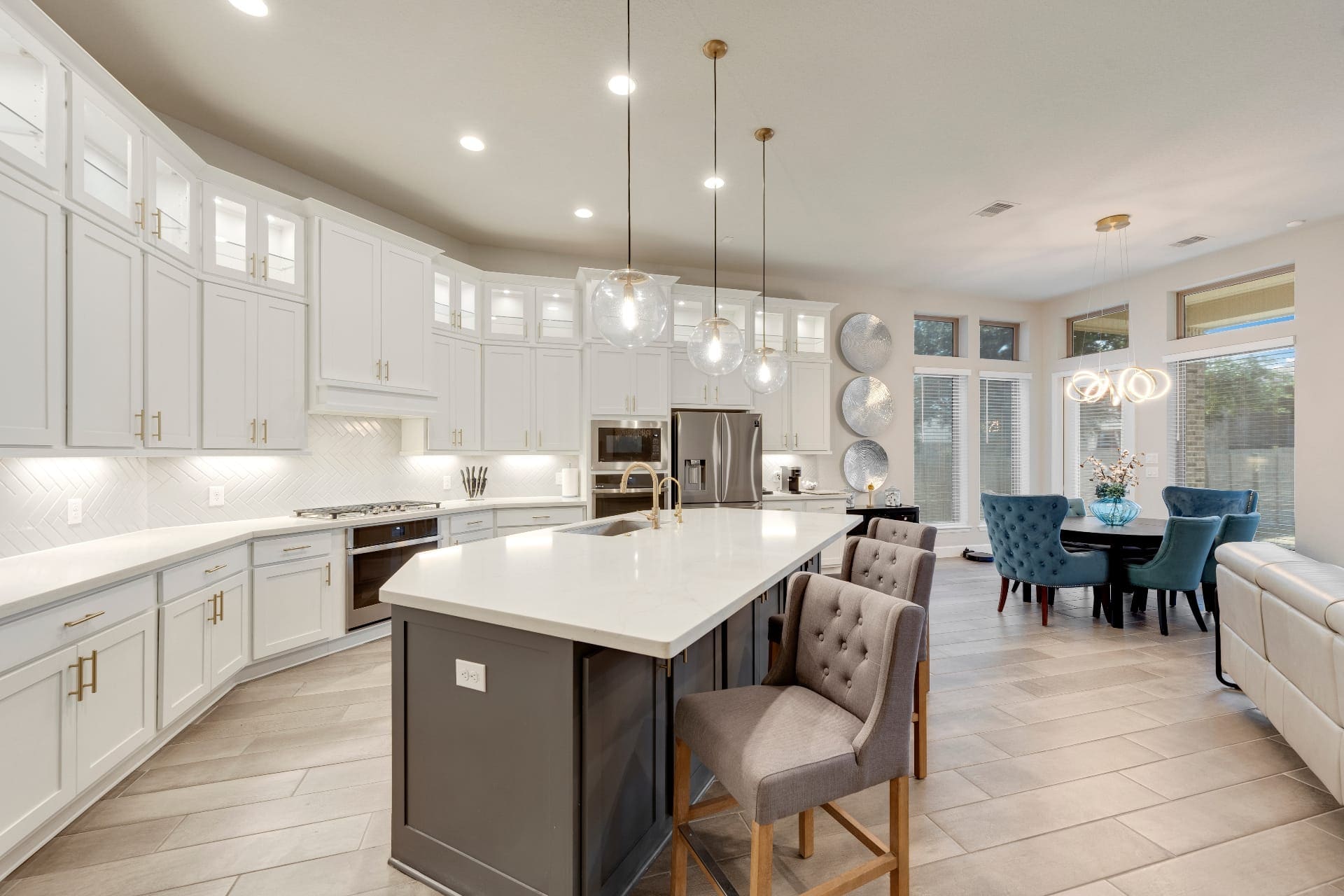
If you're searching for a straight answer on kitchen remodel costs in Philadelphia, here it is: most homeowners in the city and on the Main Line spend between $30,000 and $75,000 for a full kitchen renovation. Where you land in that range depends on the size of your kitchen, the materials you choose, and how much of the layout you're changing.
This guide breaks down what drives the cost, what you get at each price point, and what to watch out for when getting quotes.
What a Philadelphia Kitchen Remodel Actually Costs
$15,000–$30,000 — Entry-Level Remodel
At this range you're working with stock or semi-custom cabinetry, standard laminate or entry-level quartz countertops, and basic fixture upgrades. Layout stays the same — no walls moved, no plumbing relocated. This works for smaller kitchens where the bones are good and you mostly need a cosmetic refresh.
What's realistic: new cabinet doors, a new countertop, updated hardware, a tile backsplash, and new appliances.
What's not realistic: custom cabinetry, stone countertops, layout changes, or high-end fixtures.
$30,000–$75,000 — Mid-Range Full Remodel
This is where most Philadelphia homeowners land when they want a genuine transformation. You have room for semi-custom or custom cabinetry, quartz or natural stone countertops, quality appliances, new flooring, and updated electrical and plumbing if needed. Minor layout changes are possible at this level.
In a typical Philadelphia rowhome or Main Line colonial, a $45,000–$60,000 budget gets you a kitchen that looks and functions completely different from what you started with — better storage, better flow, better lighting, and finishes that hold up for 15–20 years.
This is the range Icon Remodeling works in most often. It's enough budget to do the job properly without cutting corners on materials or installation.
$75,000–$150,000+ — High-End and Custom
At this level you're looking at fully custom cabinetry built to your exact specifications, premium stone surfaces like quartzite or marble, professional-grade appliances, custom lighting plans, and potentially significant structural changes. Main Line homes in Bryn Mawr, Gladwyne, and Villanova often fall into this range simply because of kitchen size and the level of finish expected in those neighborhoods.
What Drives the Cost in Philadelphia Specifically
Labor costs are higher here than the national average. Philadelphia trades — plumbers, electricians, tile setters — charge rates that reflect a high cost-of-living market. If a national cost calculator is giving you a number, add 15–20% for the Philadelphia metro area.
Rowhome kitchens have unique challenges. Older homes in South Philly, Fishtown, Passyunk, and similar neighborhoods often have galley-style kitchens with limited square footage, original plumbing that needs upgrading, and walls that can't be moved without structural work. That complexity adds cost.
Permits are required and non-negotiable. The City of Philadelphia requires permits for electrical, plumbing, and structural work. Any contractor who tells you permits aren't necessary is either cutting corners or uninformed. Permit costs themselves are relatively modest — typically $500–$1,500 — but the process takes time and needs to be factored into the project schedule.
Main Line homes often require higher-end finishes to match the property. Putting a $25,000 kitchen in a $900,000 Haverford Township home doesn't make financial sense and can actually hurt resale value. The kitchen should be proportional to the rest of the house.
Where the Money Goes: A Rough Breakdown
For a $50,000 kitchen remodel, here's approximately where the budget gets allocated:
Cabinetry: 35–40% ($17,500–$20,000) — the single biggest line item in almost every kitchen remodel Labor: 20–25% ($10,000–$12,500) — installation, plumbing, electrical, tile work Countertops: 10–15% ($5,000–$7,500) — quartz is the most common choice at this price point Appliances: 10–15% ($5,000–$7,500) — mid-range to upper-mid appliances Flooring: 5–8% ($2,500–$4,000) Fixtures, lighting, hardware, backsplash: 5–10% ($2,500–$5,000)
These percentages shift based on your priorities. If appliances are important to you, that line goes up and something else comes down.
What's Not Included in Most Quotes
When you're comparing quotes from Philadelphia contractors, watch for what's not listed. Common items that get added later:
Demolition and disposal — removing existing cabinets, countertops, and flooring Electrical panel upgrades — older Philadelphia homes often need the panel brought up to code when adding new appliances Plumbing rough-in changes — moving a sink or adding a dishwasher connection Drywall repair — after cabinets come out, walls often need patching Structural work — if you want to open up a wall between the kitchen and dining room
A complete, honest quote should include all of these. If a quote looks significantly cheaper than others, find out what it's missing.
How Long Does a Kitchen Remodel Take in Philadelphia?
For a full remodel in the $30,000–$75,000 range, plan for 6–10 weeks from start to finish once materials are on site. The design and material selection phase before that typically takes 2–4 weeks.
The most common cause of delays is material lead times — custom cabinetry in particular can take 4–8 weeks to manufacture. A contractor who orders materials before demo starts keeps the project moving. A contractor who waits until demo is done to order cabinets is going to leave you with a torn-up kitchen for weeks longer than necessary.
Questions to Ask Before You Hire
Are you licensed and insured in Pennsylvania? Ask for the license number and verify it. Don't skip this step.
Will you pull permits for electrical and plumbing work? The answer should always be yes.
Who does the work — your own crew or subcontractors? Both models can work, but you want to know who's actually in your home.
Can I see a completed project similar to mine? A contractor who has done dozens of Philadelphia rowhome kitchens or Main Line renovations will have photos and references. Ask to see them.
What's the payment schedule? A typical schedule is a deposit at signing, a draw at cabinet delivery, and final payment at completion. Be cautious of anyone asking for more than 30–40% upfront.
Why Experience Matters in This Market
Philadelphia kitchens are not generic. A South Philly rowhome kitchen is a completely different project from a Wayne colonial or a Rittenhouse Square condo. The contractor who understands the quirks of older plumbing, Philadelphia permit requirements, and how to maximize a tight galley layout is going to deliver a better result than someone applying a one-size-fits-all approach.
Icon Remodeling has been doing this work in Philadelphia and on the Main Line for over 28 years. We've seen every situation — outdated knob-and-tube wiring, load-bearing walls in unexpected places, kitchens that haven't been touched since the 1970s. That experience means fewer surprises, cleaner execution, and a finished product that actually works for the way you live.
Ready to Get a Real Number for Your Kitchen?
Every kitchen is different. The best way to get an accurate cost for your specific project is a conversation — we'll look at your space, understand what you want to change, and give you a detailed estimate with no vague line items.
We serve Philadelphia neighborhoods including Rittenhouse Square, Fishtown, Northern Liberties, Old City, Center City, East Passyunk, Manayunk, and Chestnut Hill, as well as Main Line communities including Ardmore, Bryn Mawr, Haverford, Villanova, Wayne, Narberth, and Gladwyne.
Call (215) 918-8010 or visit our showroom at 1516 N 5th St Unit 508, Philadelphia, PA 19122 to schedule your free consultation.